
EMPOWER Peer Support Pilot Study
An ongoing project (2024 - Present).
The Aim of the Study:
The EMPOWER Peer Support program was developed to equip people with lived experience of mental health challenges to use their own experiences to provide recovery-oriented support to peers in their community. Now in its third year, the EMPOWER Peer Support Initiative will be tested for feasibility and acceptability with a cohort of trainees in the United States and around the globe.
The Background:
Complex mental health challenges, such as schizophrenia, bipolar disorder, and severe depression, affect nearly 1.1 billion people worldwide. Despite this prevalence, the mental health ecosystem is marked by profound treatment gaps, human rights violations, stigma, and a shortage of culturally representative mental health providers. Peer support, rooted in a rich history of human rights movements, has emerged as a rights-based approach to mental healthcare, addressing many of the gaps identified.
Grounded in lived experience and activist roots, peer support is a recovery-oriented, mutualistic model of mental health support. Robust evidence demonstrates that peer support improves clinical, psychosocial, and recovery outcomes. Despite this, expanding access to peer support trainings and services is hindered by fragmentation of the peer workforce, inconsistent training standards and implementation, and varying availability of trainings across contexts. Peer supporters also report “peer drift” into non-peer responsibilities, lack of peer-led supervision, and marginalization within traditional systems of care, even as many national contexts formalize peer workforce infrastructure.
The EMPOWER Peer Support Initiative responds to this gap by co-designing, with global lived experience leadership, a scalable, digital, rights-based curriculum that standardizes core peer support competencies while remaining adaptable to diverse contexts. Ultimately, we aim to build a high-quality peer workforce that expands access to humane, recovery-oriented mental health care worldwide.
The Project Plan:
Over the past two years, our team has conducted rigorous formative research to determine the “active ingredients” of peer support. In collaboration with lived-experience leaders across the globe, we developed an 11-module training program to prepare people with lived experience to become peer supporters. Learners will access training on a variety of topics, including how to share their lived experience, histories of peer support, models of support, and more.
This year, we are piloting the EMPOWER Peer Support Initiative to assess the feasibility and acceptability of our peer support training program. In partnership with One World Recovery Network and aves Mental Health, we are training two cohorts of learners, domestically and internationally, to pilot the curriculum. Pilot test findings will be used to refine the training, ensuring it is acceptable across diverse contexts.
Supporters and Project Duration:
The development of the EMPOWER Peer Support Program was funded by the Indira Foundation, and the production of curriculum videos was funded by Vishal Saluja. The pilot study is funded by the Gavalya Trust. The Harvard Medical School team partners directly with aves Mental Health and convenes a lived experience advisory board to develop and test the curriculum.
Findings:
Our systematic review assessed 41 randomized controlled trials of peer support programs. We found that peer supporters mostly used a small set of core competencies: building trusting relationships, providing support, communication, and supporting recovery and practical skill development. Surprisingly, many peer supporters were also pushed into more clinical tasks, and training and supervision were inconsistent. From this review, we determined the need for a clear competency taxonomy, stronger role boundaries, and more standardized training and supervision for peer supporters.

Building on the systematic review, we conducted a global mixed-methods study that asked peer supporters about their training, supervision, and support. Peers identified the ability to share your lived experience thoughtfully and build caring, respectful relationships as among the most essential competencies for peer supporters to be trained in. Additionally, they cited stigma, low pay, unclear roles, and ineffective training and supervision as barriers. To address these gaps, peers advocated for peer-led supervision models, equitable compensation, and longer, more tailored, and accessible training options.
Achievements:
2026
- American Psychiatric Association: Ernesto Isaac Lara presented on the ethical integration of lived expertise within biomedical mental health workforces.
- Kripalu Peer Support Summit: Represented EMPOWER and co-founded People Organized for Wellness, Empowerment, and Recovery (POWER), a coalition advocating for the peer support workforce.
2025
- Global Mental Health Summit: Publicly launched the EMPOWER Peer Support Initiative.
- Systems of Care, Young Adult Champion Award: Recognized by the National Training & Technical Assistance Center for advocacy in youth mental health and peer system navigation.
2024
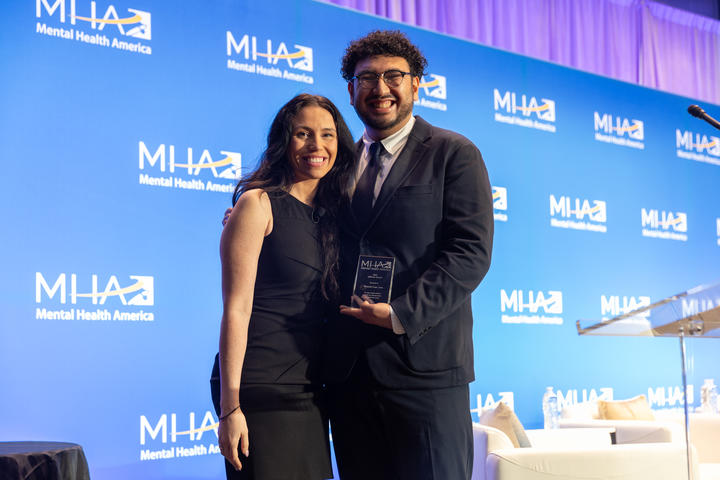
Mental Health America mPower Award: Honored for leadership in peer education and anti-stigma advocacy.

Next Steps:
Starting in fall 2026, the EMPOWER Peer Support Program will be tested for feasibility and acceptability in the United States and globally. Findings from the pilot study will be used to refine the curriculum, plan for implementation and scale, and adapt the training content to new settings.